
How Drone Hubs Improve Solar Farm Inspections with Thermal Imaging
Introduction
Solar farms cover large areas, making regular inspection a challenge for maintenance teams. From photovoltaic (PV) modules to electrical connections and surrounding infrastructure, identifying potential problems early is essential for maintaining reliable operation.
Traditional inspections can require considerable travel and manual image collection, particularly at remote or utility-scale installations. Thermal imaging offers another way to identify temperature abnormalities across PV arrays, while a Drone Hub helps automate routine aerial inspections.
By combining automated flight missions, thermal imaging, and inspection reporting, solar operators can build a more consistent approach to monitoring equipment and identifying areas that need further investigation.
Why Thermal Imaging Matters for Solar Farms
Not every PV module problem is visible to the naked eye. Some abnormalities produce temperature differences that can be detected using a suitable thermal camera.
Thermal imaging can help identify potential issues such as:
- Hotspots: Localized areas with elevated temperatures that may require investigation.
- Electrical abnormalities: Certain connection or string-level issues may produce unusual thermal patterns.
- Shading and soiling: Uneven operating conditions that can affect module performance.
- Module damage: Some defects may create thermal patterns that warrant further inspection.
Thermal images do not automatically confirm a fault. Weather, sunlight, wind, camera settings, and operating conditions can all affect the results. Inspection teams should interpret thermal findings alongside visible images and other relevant technical data.
The international standard IEC TS 62446-3:2017 provides guidance on outdoor infrared thermography for photovoltaic modules and plants in operation, including inspection procedures and the interpretation of thermal abnormalities. See the IEC standard for PV infrared thermography.
How a Drone Hub Automates Solar Inspections
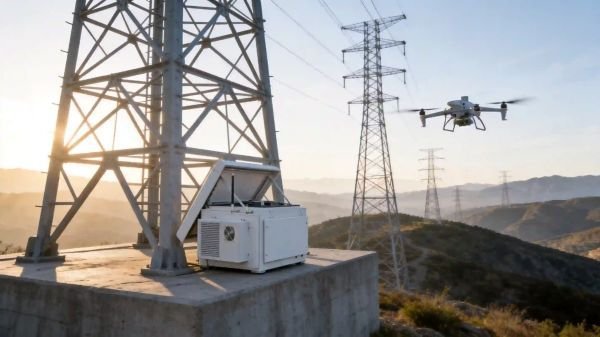
A thermal camera-equipped drone can collect useful inspection data, but regular inspections require a repeatable operating process. A Drone Hub helps connect flight planning, aircraft operations, charging, and data collection.
1. Plan Repeatable Flight Routes
Operators define inspection areas, flight routes, camera requirements, and coverage objectives. For recurring missions, saved routes can help teams revisit the same panel blocks and compare findings over time.
Routes must still account for site changes, obstacles, weather conditions, airspace requirements, and operational safety.
2. Capture Thermal and Visible Images
During the mission, the drone collects thermal imagery and, where equipped, standard visible-light images. Thermal data highlights temperature patterns, while visible imagery provides additional context about panels and surrounding structures.
Using both image types can help technicians investigate potential abnormalities more effectively.
3. Return and Transfer Inspection Data
After completing its mission, the drone returns to the designated Drone Hub for landing and charging, according to the system configuration. Captured data can then be transferred to the inspection platform for review.
This reduces the need for personnel to travel to the aircraft for every routine flight. Actual automation depends on equipment compatibility, network availability, weather limits, and site conditions.
4. Review Findings and Generate Reports
Inspection software can organize images, associate findings with locations, and flag potential anomalies. Where supported, AI tools may assist with identifying suspicious thermal patterns.
Flagged results should be reviewed before a fault is confirmed. Reports can record the affected area, image evidence, preliminary findings, and recommended follow-up actions, helping maintenance teams prioritize further investigation.
Key Benefits for Solar Farm Operators
More consistent coverage. Planned routes and scheduled missions can help operators inspect defined areas at regular intervals and compare results over time.
Less routine travel. Remote drone operations can reduce the need for personnel to visit every inspection location simply to collect aerial images. Physical repairs and diagnostic testing may still require on-site technicians.
More organized inspection data. Automatically collected and organized imagery can make it easier to locate findings, review evidence, and share results with maintenance teams.
Better preventive maintenance support. Repeated inspections can help operators track changes and identify areas that deserve closer attention. Thermal results should be considered alongside inverter data, electrical measurements, and other maintenance records.
The overall benefit depends on the solar farm’s size, inspection frequency, equipment configuration, and existing maintenance process. A Drone Hub supports the workflow; it does not eliminate the need for technical judgment.
What to Consider When Choosing a Drone Hub
Before deploying a Drone Hub for solar inspection, operators should evaluate several practical factors.
- Thermal camera capability: Confirm that the payload provides the image quality and data required for the intended inspection.
- Software and reporting: Check how the platform handles image management, anomaly review, location mapping, and report export.
- Power and connectivity: Assess available power, communications coverage, and data-transfer requirements, especially at remote sites.
- Environmental conditions: Confirm equipment operating limits for heat, dust, wind, and rain.
- System integration: Consider whether inspection findings can fit into existing maintenance and asset-management workflows.
- Safety and compliance: Establish suitable operating permissions, site-specific risk assessments, and procedures for abnormal situations.
Choosing a suitable system requires matching the aircraft, payload, software, and hub to the actual inspection requirements—not simply selecting the most automated option.
How EFLY Supports Solar Farm Inspections
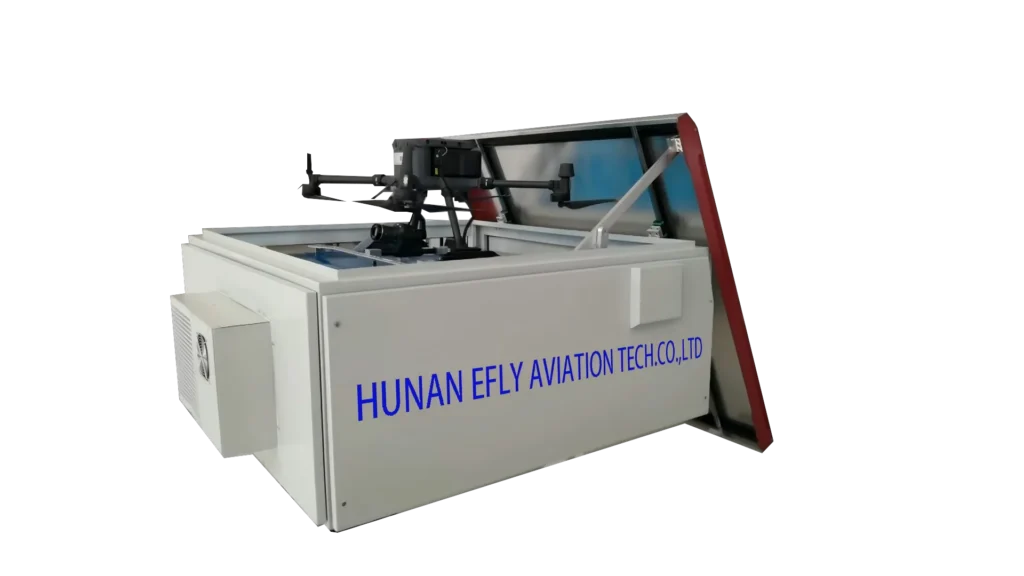
EFLY provides Drone Hub solutions designed to support automated industrial drone operations. For photovoltaic sites, its Solar Plant Drone Monitoring solution outlines an approach to aerial inspection using thermal and visible imagery to identify potential panel abnormalities for further review.
For sites considering alternative power arrangements, EFLY also offers a Solar-Powered Drone Hub. The appropriate configuration depends on site conditions, aircraft and payload requirements, power demand, and network availability.
By combining automated flight operations with an organized inspection workflow, solar operators can make routine aerial data collection more systematic and help maintenance teams focus on findings that require attention.
Conclusion
Thermal imaging helps solar operators identify temperature abnormalities that may indicate PV module problems, while a Drone Hub supports repeatable flight missions and more organized data collection.
Together, these capabilities can improve inspection consistency and support preventive maintenance across large or remote solar installations. The key is to select suitable equipment, collect reliable data, and review potential anomalies using appropriate technical procedures.
To explore Drone Hub options for your solar inspection project, contact EFLY.